Preventive Lifestyle Habits: The Most Powerful Health Investment You Can Make
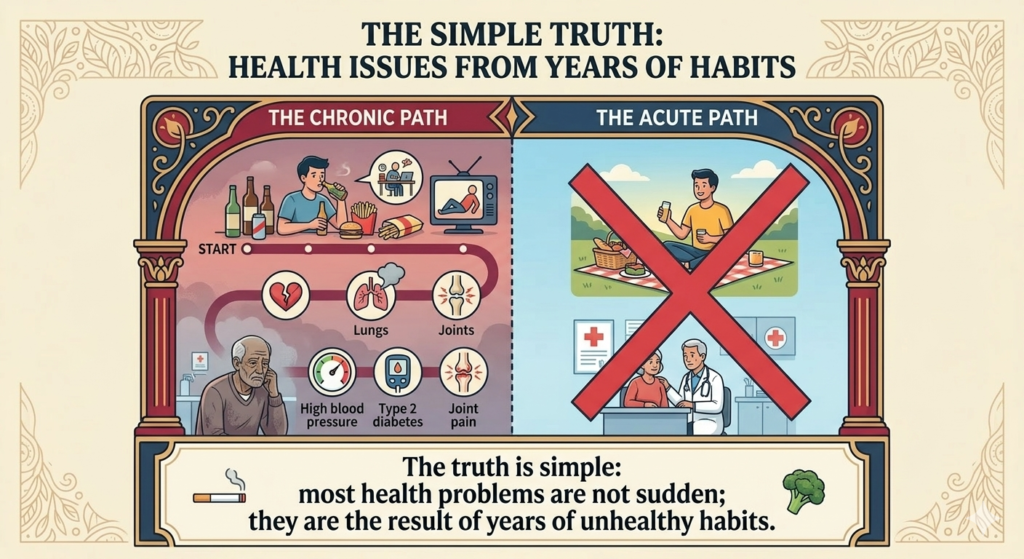
Many people realize after the age of sixty that their biggest mistake was not practicing preventive lifestyle habits earlier in life. Health problems such as heart disease, dibeties, obesity, and joint pains often develop slowly over decades.
The truth is simple: most health problems are not sudden; they are result of years of unhealthy habits.
Preventive life style habits are daily actions that protect your body and mind from disease before problems appear. When practiced consistently between the ages of 25 and 45 these habits can dramatically improve health, energy, and longevity.
This article explains why preventive lifestyle habits are important and the most effective habits that can protect your long-term health.
What Are Preventive Lifestyle Habits?
Preventive lifestyle habits are daily behaviors that help avoid disease, maintain physical strength, and support mental well-being.
Instead of treating illness later, preventive habits focus on protecting health early.
Examples include:
- Regular physical activity
- Healthy eating habits
- Proper sleep routines
- Stress management
- Routine health checkups
People who follow preventive habits usually experience better health, higher productivity, and longer life expectancy.
Why Preventive Health Habits Matter in Early Adulthood
Your body begins forming long-term health patterns in early adulthood.
Between ages 25 and 45, your metabolism, muscle strength, and organ function are at their peak. The habits you build during this period determine how your body performs later in life.
If preventive habits are ignored during these years, the consequences often appear after age 55 or 60.
Common long-term consequences include:
- High blood pressure
- Diabetes
- Chronic fatigue
- Obesity
- Joint problems
- Heart disease
Preventive habits work like long-term investments in your health capital.
10 Essential Preventive Lifestyle Habits for Long-Term Health
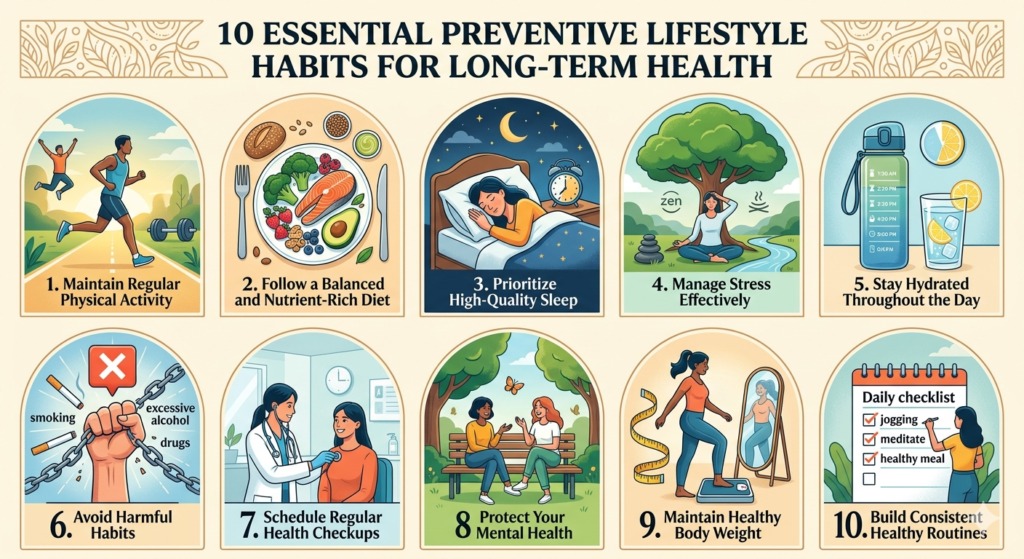
1. Maintain Regular Physical Activity
Exercise is one of the most powerful preventive health tools.
Regular movement improves:
- Heart health
- Muscle strength
- Bone density
- Mental clarity
Even simple activities such as walking, cycling, or strength training can significantly reduce the risk of chronic diseases.
Experts recommend at least 150 minutes of moderate exercise per week.
2. Follow a Balanced and Nutrient-Rich Diet
Food plays a central role in preventive health.
A healthy diet should include:
- Fresh vegetables
- Fruits
- Whole grains
- Lean proteins
- Healthy fats
Avoid excessive consumption of processed foods, refined sugar, and trans fats.
A balanced diet supports metabolism, strengthens immunity, and protects vital organs.
3. Prioritize High-Quality Sleep
Sleep is essential for physical recovery and mental health.
Poor sleep habits increase the risk of:
- Heart disease
- Depression
- Obesity
- Memory problems
Adults should aim for 7–8 hours of quality sleep each night.
Establishing a consistent sleep schedule is one of the most effective preventive habits.
4. Manage Stress Effectively
Chronic stress is a hidden contributor to many diseases.
Long-term stress can weaken the immune system and increase the risk of:
- High blood pressure
- Anxiety
- Heart problems
- Digestive disorders
Stress management techniques include:
- Meditation
- Breathing exercises
- Physical activity
- Time in nature
Managing stress helps maintain both physical and emotional balance.
5. Stay Hydrated Throughout the Day
Water is essential for nearly every biological function in the body.
Proper hydration supports:
- Brain function
- Digestion
- Skin health
- Energy levels
Many people underestimate the importance of drinking enough water daily.
A general recommendation is 2–3 liters of water per day, depending on activity level.
6. Avoid Harmful Habits
Preventive health also means avoiding behaviors that damage the body over time.
Common harmful habits include:
- Smoking
- Excessive alcohol consumption
- Poor dietary choices
- Sedentary lifestyle
Eliminating these habits significantly reduces the risk of chronic diseases.
7. Schedule Regular Health Checkups
Many diseases can be prevented or treated early through routine health screenings.
Important preventive tests include:
- Blood pressure monitoring
- Blood sugar testing
- Cholesterol checks
- Dental examinations
Regular checkups help identify health risks before they become serious problems.
8. Protect Your Mental Health
Mental health is equally important as physical health.
Preventive mental health practices include:
- Maintaining strong social relationships
- Practicing mindfulness
- Taking regular breaks from work
- Engaging in meaningful hobbies
A healthy mind improves overall quality of life and resilience.
9. Maintain Healthy Body Weight
Excess body weight is associated with many health problems.
Maintaining a healthy weight reduces the risk of:
- Diabetes
- Heart disease
- Joint damage
- Metabolic disorders
Healthy weight management requires balanced nutrition and regular physical activity.
10. Build Consistent Healthy Routines
The most powerful preventive lifestyle habit is consistency.
Health benefits appear when positive habits are practiced daily over many years.
Small daily routines such as morning walks, balanced meals, and regular sleep patterns create long-term health protection.
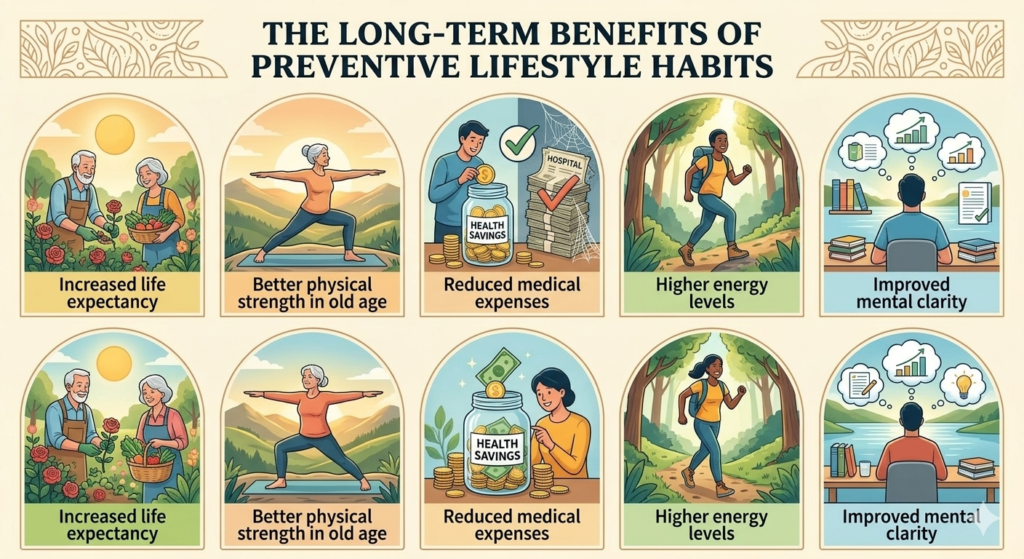
The Long-Term Benefits of Preventive Lifestyle Habits
Practicing preventive health habits provides several long-term benefits:
- Increased life expectancy
- Better physical strength in old age
- Reduced medical expenses
- Higher energy levels
- Improved mental clarity
People who invest in preventive health during their younger years often experience greater independence and mobility later in life.
Final Thoughts
Health is one of the most valuable assets in life, yet many people neglect it during their most productive years.
The biggest regret many individuals express after the age of sixty is simple: they did not practice preventive lifestyle habits earlier.
The good news is that preventive health habits are simple and accessible to everyone.
By starting today and maintaining consistent healthy routines, you can protect your body, strengthen your mind, and build a healthier future.
Your daily habits today will determine your quality of life tomorrow.