Neglecting Heart Health: The Silent Risk That Builds Over Decades
Heart disease is one of the most common health problems worldwide, yet many people underestimate how slowly it develops.
Most heart problems do not appear suddenly. They often develop gradually over twenty to forty years due to unhealthy lifestyle habits.
Poor diet, lack of physical activity, high stress, smoking, and ignoring medical checkups gradually damage the cardiovascular system.
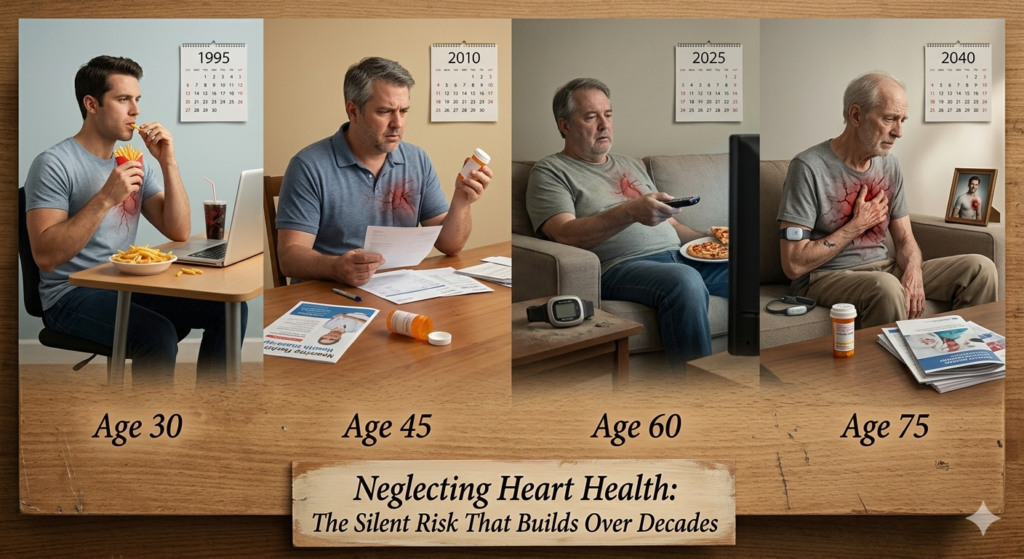
Many individuals only begin to think about heart health after the age of sixty, when symptoms such as high blood pressure, fatigue, or chest discomfort appear.
By that time, the damage may already have progressed significantly.
The truth is that heart disease is largely preventable when healthy habits are adopted early in life.
Maintaining a balanced diet, exercising regularly, and monitoring cholesterol levels can significantly reduce the risk of heart disease later in life.
Understanding the long-term consequences of neglecting heart health can motivate individuals to take preventive action early.
What Does Neglecting Heart Health Mean?
Neglecting heart health refers to ignoring the lifestyle practices necessary to maintain a healthy cardiovascular system.
This neglect often includes behaviors such as:
- Consuming unhealthy foods regularly
- Living a sedentary lifestyle
- Ignoring physical exercise
- Failing to monitor blood pressure and cholesterol levels
- Experiencing chronic stress without proper management
Over time, these habits place excessive strain on the heart and blood vessels.
When the cardiovascular system is continuously stressed, plaque buildup may occur in arteries, leading to conditions such as atherosclerosis, which restricts blood flow.
Why Heart Disease Develops Slowly Over Time
Heart disease is often called a silent condition because it progresses gradually.
Damage to the cardiovascular system typically begins many years before symptoms appear.
For example:
A diet high in saturated fats may increase cholesterol levels.
High cholesterol contributes to plaque buildup in the arteries.
As plaque accumulates, blood flow becomes restricted.
Eventually, this can lead to serious events such as heart attacks or strokes.
Because this process occurs slowly, many people remain unaware of the developing problem.
This is why preventive heart care is essential.
Major Lifestyle Factors That Harm Heart Health
Several lifestyle factors significantly increase the risk of heart disease.
Understanding these factors helps individuals make better health decisions.
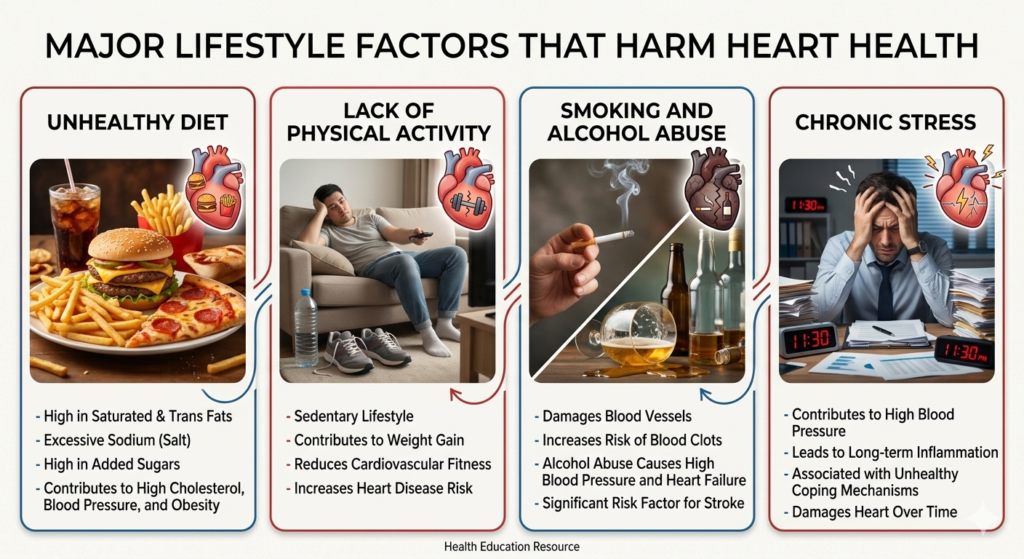
Unhealthy Diet
Diets high in processed foods, trans fats, and excessive sugar can increase cholesterol levels and damage blood vessels.
Lack of Physical Activity
A sedentary lifestyle weakens the heart muscle and reduces circulation efficiency.
Smoking and Alcohol Abuse
Smoking damages blood vessels and increases blood pressure, while excessive alcohol can weaken heart function.
Chronic Stress
Long-term stress increases cortisol levels, which can contribute to high blood pressure and heart strain.
The Role of Diet in Protecting the Heart
Diet plays one of the most significant roles in cardiovascular health.
A heart-healthy diet should include:
- Fresh fruits and vegetables
- Whole grains
- Lean proteins such as fish and legumes
- Healthy fats such as olive oil and nuts
At the same time, it is important to limit:
- Processed foods
- Excess salt
- Saturated fats
- Sugary beverages
A balanced diet supports healthy cholesterol levels and reduces the risk of arterial plaque buildup.
Why Regular Exercise Is Essential for Heart Health
Physical activity strengthens the heart muscle and improves blood circulation.
Regular exercise provides several cardiovascular benefits:
- Reduces blood pressure
- Improves cholesterol balance
- Enhances blood flow
- Helps maintain a healthy body weight
Health experts recommend at least 150 minutes of moderate physical activity per week.
Activities such as walking, swimming, cycling, or strength training can significantly improve heart health.
Monitoring Cholesterol and Blood Pressure Early
One of the biggest mistakes many people make is ignoring regular health checkups.
High cholesterol and high blood pressure often develop without noticeable symptoms.
Routine medical screening helps detect these conditions early.
Important health tests include:
- Cholesterol level testing
- Blood pressure measurement
- Blood sugar testing
Early detection allows individuals to make lifestyle changes before serious damage occurs.
Warning Signs of Poor Heart Health
Although heart disease develops slowly, certain symptoms may appear as the condition progresses.
Common warning signs include:
- Persistent fatigue
- Shortness of breath
- Chest discomfort
- Irregular heartbeat
- Swelling in the legs or feet
Anyone experiencing these symptoms should seek medical advice promptly.
Early medical intervention can prevent serious complications.
Long-Term Consequences of Neglecting Heart Health
Ignoring heart health for many years can lead to several serious medical conditions.
These include:
- Coronary artery disease
- Heart attack
- Stroke
- Chronic hypertension
- Heart failure
These conditions can significantly reduce quality of life and increase medical expenses.
However, most of these outcomes are preventable with early lifestyle changes.
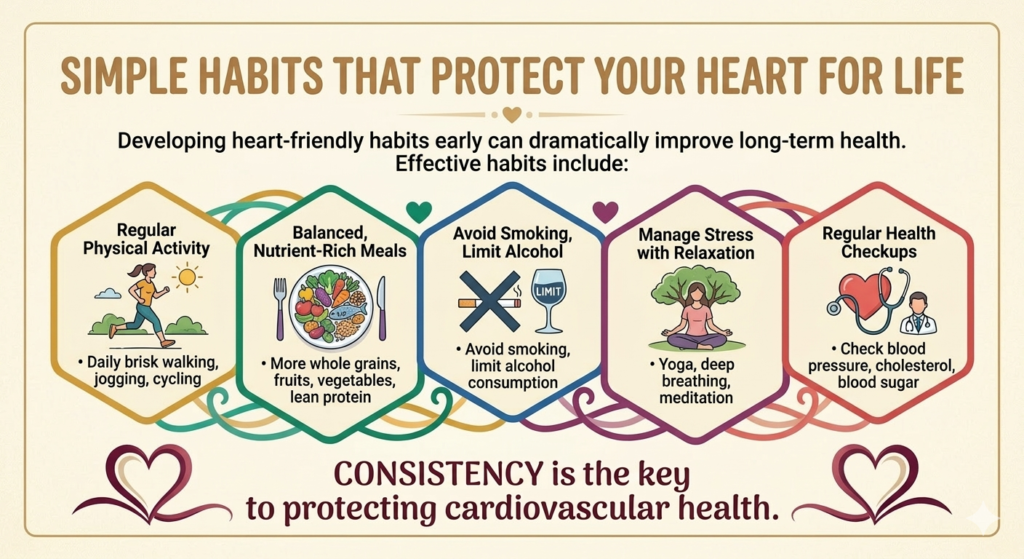
Simple Habits That Protect Your Heart for Life
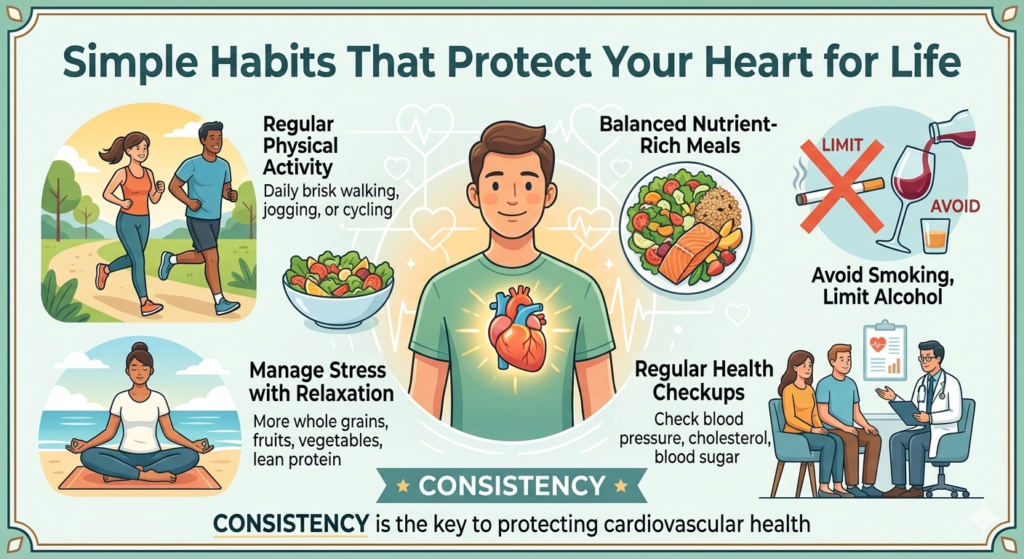
Developing heart-friendly habits early can dramatically improve long-term health.
Some effective habits include:
- Maintaining regular physical activity
- Eating balanced, nutrient-rich meals
- Avoiding smoking and limiting alcohol
- Managing stress through relaxation techniques
- Scheduling regular health checkups
Consistency in these habits is the key to protecting cardiovascular health.
The Long-Term Benefits of Caring for Your Heart
Taking care of heart health provides many lifelong benefits.
These include:
- Improved physical endurance
- Better blood circulation
- Reduced risk of heart disease
- Increased longevity
- Higher energy levels
A healthy heart supports every organ in the body, making it one of the most important aspects of overall health.
Conclusion
Neglecting heart health is one of the most common mistakes people realize later in life.
Heart disease often develops silently over decades, gradually damaging the cardiovascular system.
Fortunately, the risk can be greatly reduced through preventive lifestyle choices.
Maintaining a healthy diet, exercising regularly, and monitoring cholesterol levels can protect the heart for many years.
The best time to start caring for your heart is not after symptoms appear—it is today.
Small daily habits can create a powerful foundation for lifelong heart health.